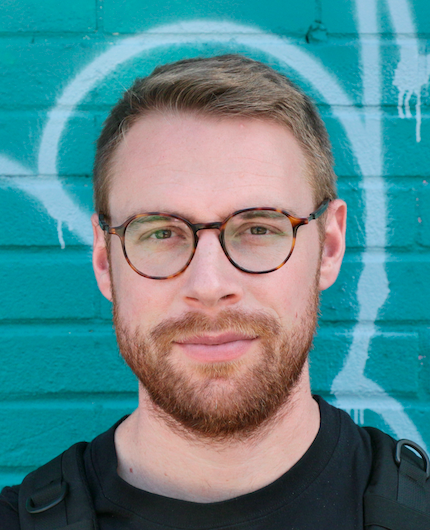
I am an Associate Professor in the Department of Language Science and Technology at Saarland University and a Scientific Director at the German Research Center for Artificial Intelligence (DFKI). Previously, I was a postdoctoral researcher at Mila – Quebec AI Institute and McGill University in Montréal. I obtained my PhD in Computer Science from Saarland University in Saarbrücken. I am a member of ELLIS.
My research is in the field of Natural Language Processing and Artificial Intelligence. I work on understanding the capabilities, limitations, and inner workings of large language models (LLMs). I am particularly interested in model adaptation. This includes developing interpretability methods to study how models change as a result of adaptation, LLM unlearning, and continual learning.
News
-
Our paper Forecasting Downstream Performance of LLMs With Proxy Metrics has been accepted to NeurIPS 2026! 🎉
-
I have been appointed Professor at Saarland University! You can find the official press release here.
-
Three papers accepted to COLM 2026 🇺🇸: The Illusion of Superposition?, LLM2Vec-Gen, and LACUNA. See you in SF 🌉!
-
Three papers accepted to ICML 2026 🇰🇷: LatentLens, Operationalising the Superficial Alignment Hypothesis, and the position paper Interpretability Can Be Actionable.
-
Two papers accepted to ACL 2026 🇺🇸: Do Generalisation Results Generalise? and CLaS-Bench: A Cross-Lingual Alignment and Steering Benchmark.